Resume Tip #5

Resume Tip: Avoid using acronyms in your resume, especially terms that are unique to your employer.

Resume Tip:  Avoid using acronyms in your resume, especially terms that are unique to your employer.

Most organizations develop terms and acronyms that are unique to the firm.  Using these terms on a resume will usually confuse the reader.  You are better off replacing terms with more general words that have a similar meaning.


If you are unsure if the terms in your resume are widely known or obscure, get an opinion from someone outside your company or industry.

PalladianCR’s 200th Post

This is my 200th post since starting the blog. Thank you for your continuing to read the blog.

This is my 200th post since starting the blog.  I appreciate the advice and encouragement from a number of readers that have contacted me over the last nine months.  The blog continues to grow.  We get between 50 and 100 visitors a day now, and have over 90 people signed up for the RSS feed or our newsletter.  I'm excited about the continued growth.

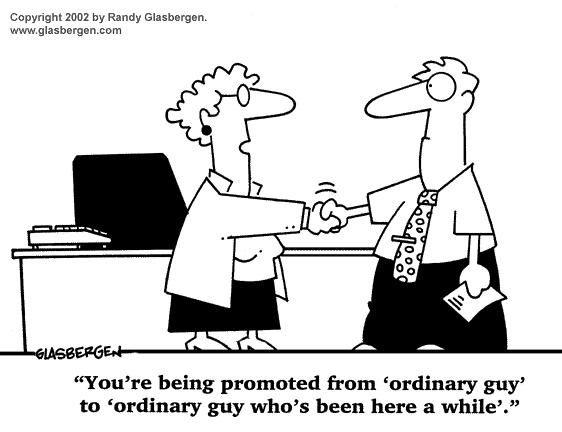
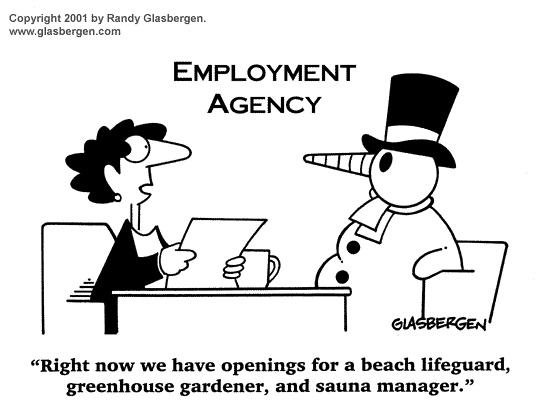
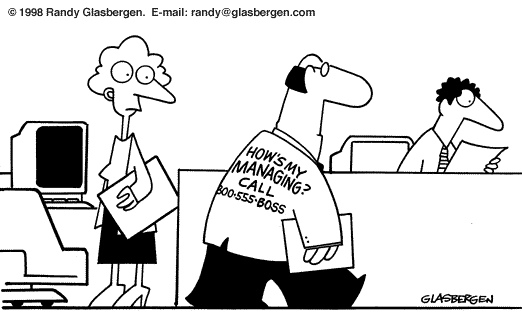
I have been making changes to the blog, some of which you may have noticed.  I formed an agreement with Randy Glasbergen so that we can include his cartons on the blog, and have also started incorporating more graphics and images with the articles.  I am working with a few people that that expressed an interest in writing for the blog and look forward to including their guest posts.  I am going to continue to provide a combination of advice articles and real world examples from resumes and interviews.

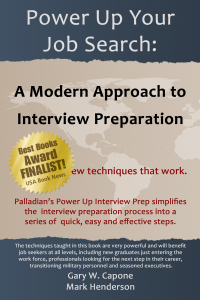
Wednesday, I submitted to the printer the final draft of a book we have been writing over the last six months.  It should be available for purchase within a few weeks.  With that project nearly complete, I hope to begin producing videos for the blog again. 

Thank you for continuing to read the blog, and let me know if there are ever any changes or improvements you would like to see.

Gary W. Capone

Behavioral Questions About Values

Behavioral questions can target any potential situation at work. Included are a selection of questions that target a job candidate’s values, attitude and personal courage.

Behavioral questions ask the job candidate to provide details of a specific situation they have encountered. The interviewer assesses the candidate based on how they performed, since past performance can be an excellent indicator of future performance.

Behavioral questions can target any potential situation at work. Below are a selection of questions that target a job candidate’s values, attitude and personal courage.

  • Tell me about time when made an unpopular decision.

  • Tell me about a time when you stood up for your values.

  • Tell me about a time when you confronted a superior about something they were doing.

  • Tell me about a time when you took a risk that worked out.

  • Tell me about a time when you took a risk that didn’t work out.

  • Tell me about a time when you did something outside your comfort zone.

  • Tell me about the most embarrassing thing you have done at work.

  • Tell me about a time when you didn’t stand up for your values and you wish you had.

  • Tell me about a time when you had a confrontation with a coworker.

  • Tell me about a time when you took responsibility for a failure.

  • Tell me about a time when you discovered a coworker was doing something dishonest.

  • Tell me about a time when you made a decision you knew would make someone mad.

To be successful answering behavioral questions, you need to be specific. General answers will not be effective. The best answer will provide a clear, specific example from your experience.


Get our book on behavioral interviewing.

Other Great Books to help you prepare for Behavioral Interviews:

Job Trends

Indeed.com released a new tool providing trends for a dozen industries. The tool displays job market data from the job postings on Indeed.

Indeed.com released a new tool providing trends for a dozen industries. The tool displays job market data from the job postings on Indeed.

Indeed is a job aggregator. The sites pulls job postings from a wide range of websites, including job boards and corporate websites. It is a great resource for job seekers that want to search for jobs from a large number of sources at once.

You can see the job market trends at http://www.indeed.com/jobtrends/industry 

Ordinary vs Exceptional

For almost every career, there are numerous candidates available for each position. Only one will get hired for each job, though. When five, ten or more people, with similar backgrounds apply for a job, there are a number of factors that affect who gets the offer. The factors most job seekers consider as important for a company to make a hiring decision include education, work experience and technical skills. These are all important. In fact, these are the criteria used to select candidates for interviews. In the interviews, though, it takes more than just these.
For almost every career, there are numerous candidates available for each position. Only one will get hired for each job, though. When five, ten or more people, with similar backgrounds apply for a job, there are a number of factors that affect who gets the offer.

The factors most job seekers consider as important for a company to make a hiring decision include education, work experience and technical skills. These are all important. In fact, these are the criteria used to select candidates for interviews. In the interviews, though, it takes more than just these.

In every career, there are elements that differentiate ordinary from exceptional. We have all seen this in school, sports, work and almost every aspect of life. There are people we know that, for a given activity, are exceptional and others that aren’t. A hiring manager looks for the person that is likely to be an exceptional performer in a specific role.

It’s easy to find people that can do a poor job, and not difficult to find people that will be ordinary or mediocre performers. Identifying and attracting exceptional performers is challenge. There are two reasons for this. First, only a small percentage of candidates are truly exceptional in a specific role. That’s what it means to be exceptional. Second, many job seekers don’t understand how to demonstrate that they are exceptional. They focus on showing they are qualified, but nothing more.

You need to develop a way of communicating how you are exceptional. This starts by recognizing your strengths and weaknesses, and how you utilize these to succeed. Then, develop a variety to examples from your experience demonstrating how you have been successful. If you do this, you will improve your chances of getting an offer dramatically.

Some individuals do not feel they are exceptional, or worse, feel that they are failures. This is more common with people shortly after losing a job. They internalize the job loss as a personal failure more significant than anything else they have done. This will significantly hinder your job search.

If you do not consider yourself exceptional in a role, there are two possible reasons. First, you could be right and need additional training or experience to move into a new more demanding role or to change careers. Second, you may not be able see the aspects of your career that make you exceptional.

In both cases, there are things you can do to improve your marketability. If you require additional training and experience, get it. This can take time to complete, but is worth the effort to move you forward in your chosen career. If you are exceptional but have trouble communicating this, get some help.

Spam and Your Job Search

In an active job search, you will send and post your resume a number of places. Some of these may be publicly accessible, allowing anyone to obtain your email address. This can lead to a tremendous amount of spam. There are ways you can control the spam you receive.

In an active job search, you will send and post your resume to a number of places. Some of these may be publicly accessible, allowing anyone to obtain your email address. This can lead to a tremendous amount of spam. There are ways you can control the spam you receive.

One of the best solutions for a job seeker is to use a different email address for your job search. Create a free email account on a service like Gmail. This will keep your personal email address confidential and only lead spammers to your new account.

When creating an email address for you job search, make it professional. Do not borrow someone else’s account for your search. This can make a bad impression. Using the email of a spouse or child raises the question of whether you have a personal email and why you didn’t create one for your search. Using someone else’s email will not prevent spam. It will just send it to them instead of you.

A good format for your email address will include a variation on your name. For example:

  • First initial and last name – jdoe @ emaildomain . com

  • First and middle initial and last name – jjdoe @ emaildomain . com

  • First name and last initial – johnd @ emaildomain . com

  • First and last name – johndoe @ emaildomain . com

  • First and last name with hyphen – john-doe @ emaildomain .com

You may find some or all of these choices are unavailable from a free email service. Gmail has millions of accounts, making it more difficult to find a unique name. Adding numbers can be an effective solution. A two digit number added to the end of your name will often be available.

Once you have an account for your email, you need to decide how to deal with the spam you get. Setting up a job search specific account will not stop the spam, it will just keep it our of your regular email inbox. There are options for dealing with spam.

Spam Filters: Most email services have some type of spam filter included. You may have the choice of setting how the filter works. The challenge is weeding out the right emails and not losing important ones. I prefer to let more in and delete the junk manually with my email. I’d rather deal with some extra spam than miss an important email, but this is personal preference.

Anti-Spam Software: If you aren’t happy with the spam filter included with your email service, you can find software that will screen your emails.

Spam Prevention: There are services that require someone sending an email to you to validate that they are a real person. This is great for preventing spam, but I strongly discourage using a service like this in your job search. If someone reads your resume and wants to contact you, you should make it easy for them. Requiring them to complete a validation step so their email will reach you may cause them to pass you over. I have done this with borderline candidates. For someone that I don’t think is especially strong, I’m more likely to email than call.  If the candidate has a validation step, I usually will not compete it since the candidate wasn’t an especially strong fit in the first place.  With the number of resumes I receive, I just don’t have time. There’s a good change the person screening your resume will be equally busy.

The bottom line is that you will receive some spam. When you get spam, delete it. Never respond (that will just encourage the spammer to send more). Some spam will include offers that sound too good to be true. They are. Thousands of people are taken advantage of every year. Be careful.

Interview Tip #4

Interview Tip: Assess the fit of the position for your goals as well as selling your potential to the employer.

Interview Tip: Assess the fit of the position for your goals as well as selling your potential to the employer.

Landing the right job is the goal.  A job that is a poor fit may hurt your career in the long run.  Assess the job for its match to your goals, abilities and interests. In each interview, you are interviewing the employer as they are interviewing you.

If you are having trouble determining the type of job you want to pursue, consider working with a career development specialist.  Futures in Motion is a career coaching firm with a number of great resources and services to help job seekers select the right career.

Resume Tip #4

Resume Tip: When writing about accomplishments, minimizing a loss can be as significant as generating a profit.

Resume Tip: When writing about accomplishments, minimizing a loss can be as significant as generating a profit.

The economy is down.  Many companies are seeing declining incomes, lower sales and declining performance.  It is still possible to be successful.  If a company breaks even this year, and all of its competitors have large losses, the company would be considered very successful.  Look for aspects of your career that demonstrate how you performed well compared to your competition and include examples of this performance on your resume.


Behavioral Interview Questions For Leadership Skills

Hiring managers often focus on assessing the leadership skills of job seekers. To do this, many use Behavioral Interview Questions. A behavioral interview question asks the job seeker to tell a specific story from their experience, illustrating how they acted and the results they achieved in the past. The goal of a behavioral question is to predict how the job seeker will preform based on their past performance.

Hiring managers often focus on assessing the leadership skills of job seekers. To do this, many use Behavioral Interview Questions. A behavioral interview question asks the job seeker to tell a specific story from their experience, illustrating how they acted and the results they achieved in the past. The goal of a behavioral question is to predict how the job seeker will preform based on their past performance.

Below are a selection of questions targeting leadership skills:

  • Tell me about a time when you led a team with low morale.

  • Tell me about a time when you managed two people that did not get along.

  • Tell me about a time when you fired someone that was very well liked at the company.

  • Tell me about a time when you helped someone improve their performance.

  • Tell me about a time when you had to get your team to make a major change that they disagreed with.

  • Tell me about a time when you recognized the achievement of someone you managed.

  • Tell me about a time when you hired someone that didn’t work out.

  • Tell me about the most challenging leadership situation you have faced.

  • Tell me about a time when you delegated effectively.

  • Tell me about a time when you made an unpopular decision.

  • Tell me about a time when you took over an under-performing team.

  • Tell me about the biggest leadership mistake you have made.

  • Tell me about a time when you had to adapt your leadership style to meet a challenge.

These questions touch on some of the aspects of leadership. There thousands of potential questions, and it is unlikely you will hear any of these specifically. If you prepare for these, though, you should be able to adapt to a wide range of leadership questions.


Get our book on behavioral interviewing.

Other Great Books to help you prepare for Behavioral Interviews:

Inbound Marketing for a Job Search

I ran into a great article about Inbound Marketing for a job search. Inbound Marketing is a type of marketing that focuses on allowing customers to find you. Most marketing is outbound in nature. Post ads, cold call, send direct mail are all outbound marketing techniques. They rely on the company contacting the prospect. Inbound marketing relies on positioning the company to get found by prospects that are looking to buy.

I’ve written several articles about creating an online presence that you can leverage in your job search.  The idea is to develop a brand that leads hiring managers to you, rather than try to get their attention sending out resumes.  You can do this through blogs, webpages, social media sites, LinkedIn, and numerous other tools.

Building a brand that can help your job search can’t be done overnight.  It requires work over a period of months to be effective.  Fortunately, it doesn’t require much time on a daily basis.

I bring this topic up again because I ran into a great article about Inbound Marketing for a job search.  Inbound Marketing is a type of marketing that focuses on allowing customers to find you.  Most marketing is outbound in nature.  Advertising, cold calls, and direct mail are all outbound marketing techniques.  They rely on the company contacting the prospect.  Inbound marketing relies on positioning the company to get found by prospects that are looking to buy.

In a job search, hiring managers actively look to find the best candidate.  Most candidates market themselves by sending resumes in response to job posting – an active marketing technique.  This technique puts your resume in a stack with everyone else.

An inbound approach would be to author a blog or website on your industry so that hiring managers find you when they look for industry experts.  This technique also allows you to build relationships with people that can influence your search by recommending you to hiring managers.

A key reason why this approach works is that it is difficult to execute.  Most people will not take the time to build an online presence.  The effort required might only be a few minutes a day, but few will commit to this.  Those that do will standout from their competition.

Take a look at the Inbound Marketing article for your job search.  I’ve run into several people recently that landed jobs directly as a result of these techniques.  They work, but they take time and effort to implement.